Most homeowners only think about their roof when a water stain appears on the ceiling. By then, the damage is often well advanced. However, warning signs exist long before it gets to that point.
This article helps you recognize these signs, understand what they mean, and decide what to do based on your situation. You'll have a clear idea in just a few minutes.
Key takeaways
curled, cracked, or missing shingles are the first signs that a repair is needed.
A visible leak inside indicates a problem often more extensive than it appears.
Quebec's freeze-thaw cycles accelerate material degradation : seasonal monitoring is essential.
Repairing early costs much less than letting a problem worsen.
A targeted repair may be enough; a complete replacement isn't always necessary.
Visible signs from the ground
A quick glance from your yard can reveal a lot. Curled or buckled shingles no longer hold properly and allow moisture to pass through. A missing shingle, on the other hand, directly exposes the underlayment to the elements. If you notice black granules in your gutters, it's a sign that the shingles are losing their protective layer and are nearing the end of their useful life.
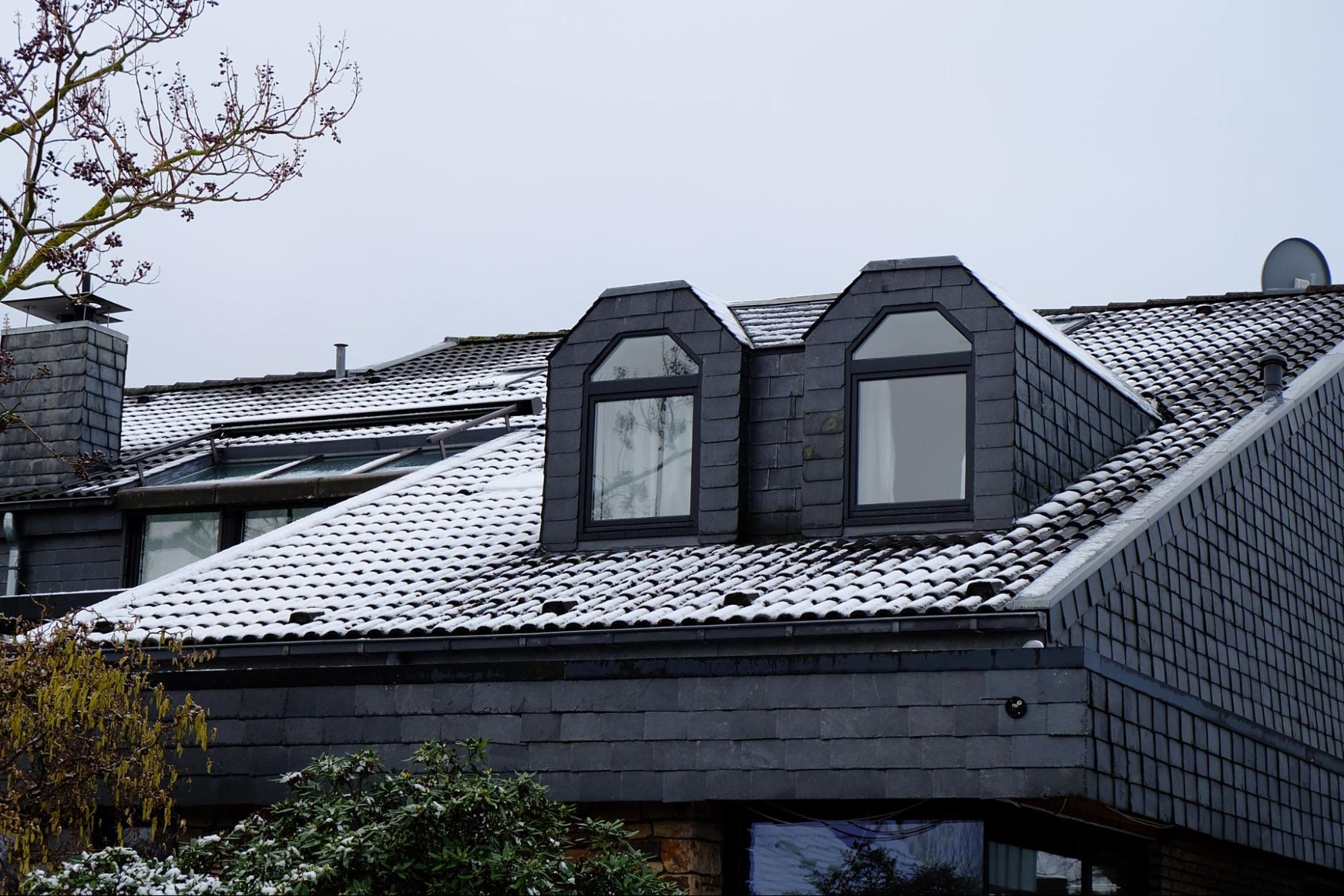
The flashing around the chimney and ventilation outlets also deserves careful attention: a rusted or detached piece is enough to create a water entry point. The presence of moss or lichen on the roofing, meanwhile, indicates prolonged moisture retention, which deeply deteriorates the materials.
The signs aren't limited to the exterior. Some roofing problems first appear indoors, and they deserve just as much attention:
Moisture stains on the ceiling indicate an active leak, often more extensive than what's visible to the naked eye.
Mold in the attic can develop even without a visible leak, due to a sealing or ventilation defect.
A musty smell in the attic is often indicative of excessive humidity related to the roof or insulation.
According to the Association of Master Roofers of Quebec (AMCQ), the reference organization for the roofing industry in Quebec, a twice-yearly inspection, in spring and fall, is recommended to detect these problems before they worsen.
Repair or Replace? The Decision Guide
Situation
What It Means
What to Do
A few missing or cracked shingles
Localized damage
Targeted repair possible
Loose or rusted flashing
Potential leak area
Urgent repair recommended
Warped shingles on one section
Partial aging
Inspection + section replacement
Water stains on the ceiling
Active water infiltration
Quick intervention required
Heavy granule buildup in gutters, roof aged 15 to 25 years or more
End of lifespan approaching
Evaluation for full roof replacement
Widespread moss + discolored shingles
Advanced deterioration
Consultation for roof replacement
Here's how to react depending on the situation
An active leak during rainy weather, shingles torn off after a storm, or standing water on a flat roof: these situations cannot wait. Water damage progresses quickly; a small leak can reach the wood structure, then the insulation, even before it's visible indoors.
If the signs are more discreet, such as a few granules in the gutters or slight discoloration, short-term monitoring may suffice. A professional consultation in spring or fall will confirm if intervention is necessary.
In both cases, a qualified roofer can quickly assess whether a targeted repair is sufficient or if a full replacement is required.
Preventive maintenance: the best way to avoid emergencies
A well-maintained roof lasts longer and costs less to maintain. A few simple habits make a big difference:
Clean gutters twice a year to prevent water backups.
Trim branches overhanging the roof to reduce friction and debris accumulation.
Check the condition of flashing, seals, and edges after each winter or major storm.
Taken together, these actions help identify minor defects long before they require major intervention.
A healthy roof is managed proactively
Your roof doesn't need to be perfect to protect your home well; it needs to be monitored. The vast majority of costly repairs could have been avoided by intervening a few months earlier.
Whether your roof is shingled, membrane, or metal, the same principles apply: observe, act early, and trust a professional to assess what the eye cannot see.
Get an opinion from a qualified roofer
Have you spotted a worrying sign or do you simply want peace of mind? At 123Couvreur, you can receive up to 3 free quotes from RBQ licensed roofers. Compare and make an informed decision, without pressure or obligation.
Contact usfor answers to your questions or to receive your three quotes.
Frequently asked questions
Can only part of a roof be repaired?
Yes. When the damage is limited to a specific area, a roofer can replace the affected shingles, tighten flashing, or seal a leak without touching the rest of the roof. This is often sufficient for localized problems.How long does an asphalt shingle roof last in Quebec?
According to the ACQC, asphalt shingles have a lifespan of 15 to 25 years, depending on maintenance and climate conditions. Quebec’s freeze-thaw cycles can accelerate this deterioration without regular maintenance.What types of damage are generally covered by home insurance?
Sudden and unexpected events, such as a storm, a fallen tree, or an impact, are usually covered. Normal wear and tear or lack of maintenance generally are not. Consult your insurer to learn the details of your policy.How can I tell if my flat roof needs repairs?
Watch for areas where water pools after rain, blisters on the membrane, and any signs of moisture indoors. A flat roof should be professionally inspected every year, especially after a winter with heavy snowfall.When is it necessary to completely redo a roof instead of repairing it?
When the damage is widespread, with deteriorated shingles across most of the roof, multiple leaks, or a damp structure, a full replacement becomes unavoidable. A roofer can quickly assess whether repairs are still viable or if a full replacement is the wiser option.
[ Meet the author ]
The 123Couvreur experts
The 123Couvreur experts are a network of over 50 RBQ-certified roofers working on residential, commercial, and industrial roofing projects throughout Quebec. Our articles are written and reviewed by these experienced roofers, ensuring that every piece of advice is field-tested before it is published.